Whit Walks
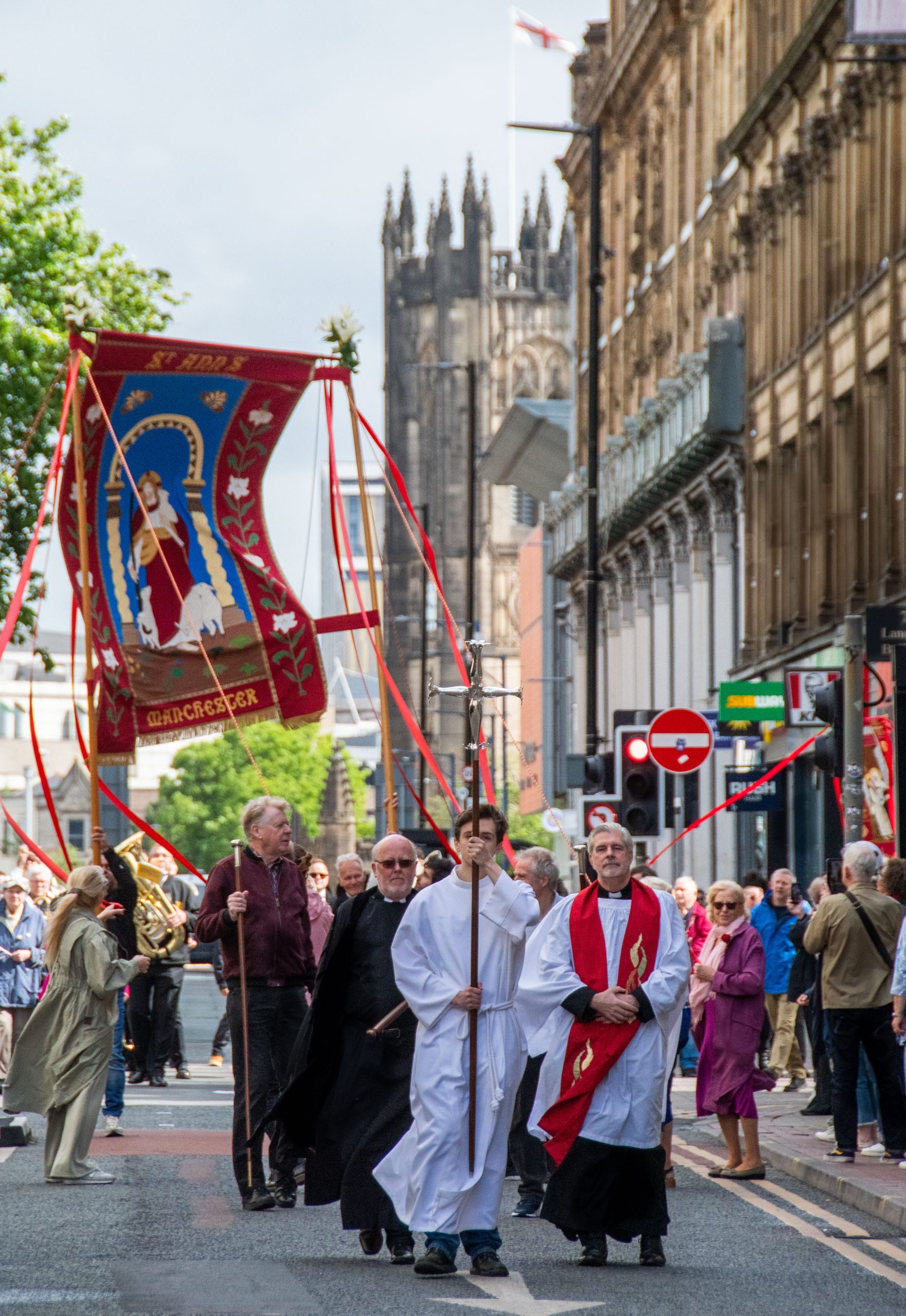
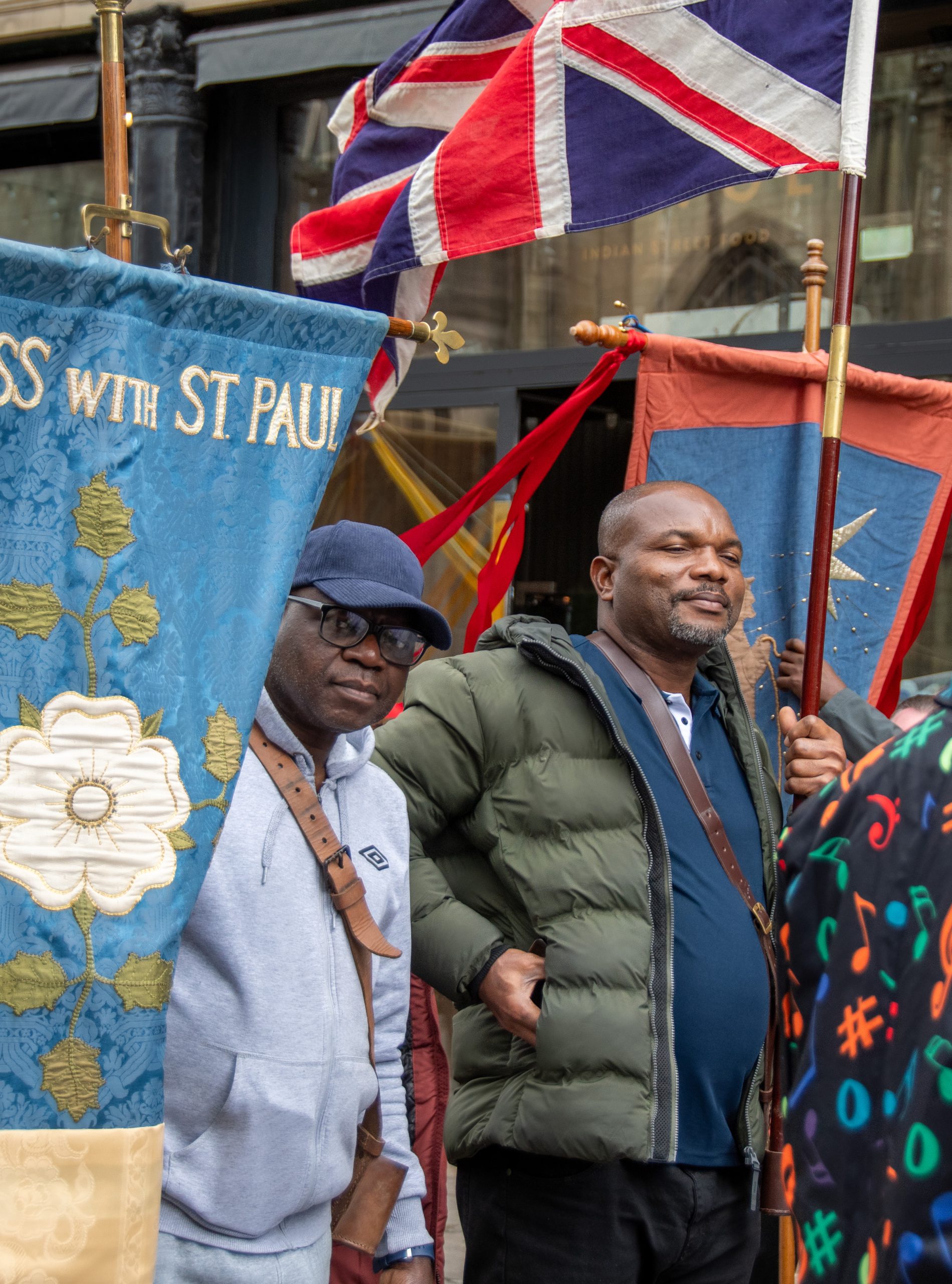
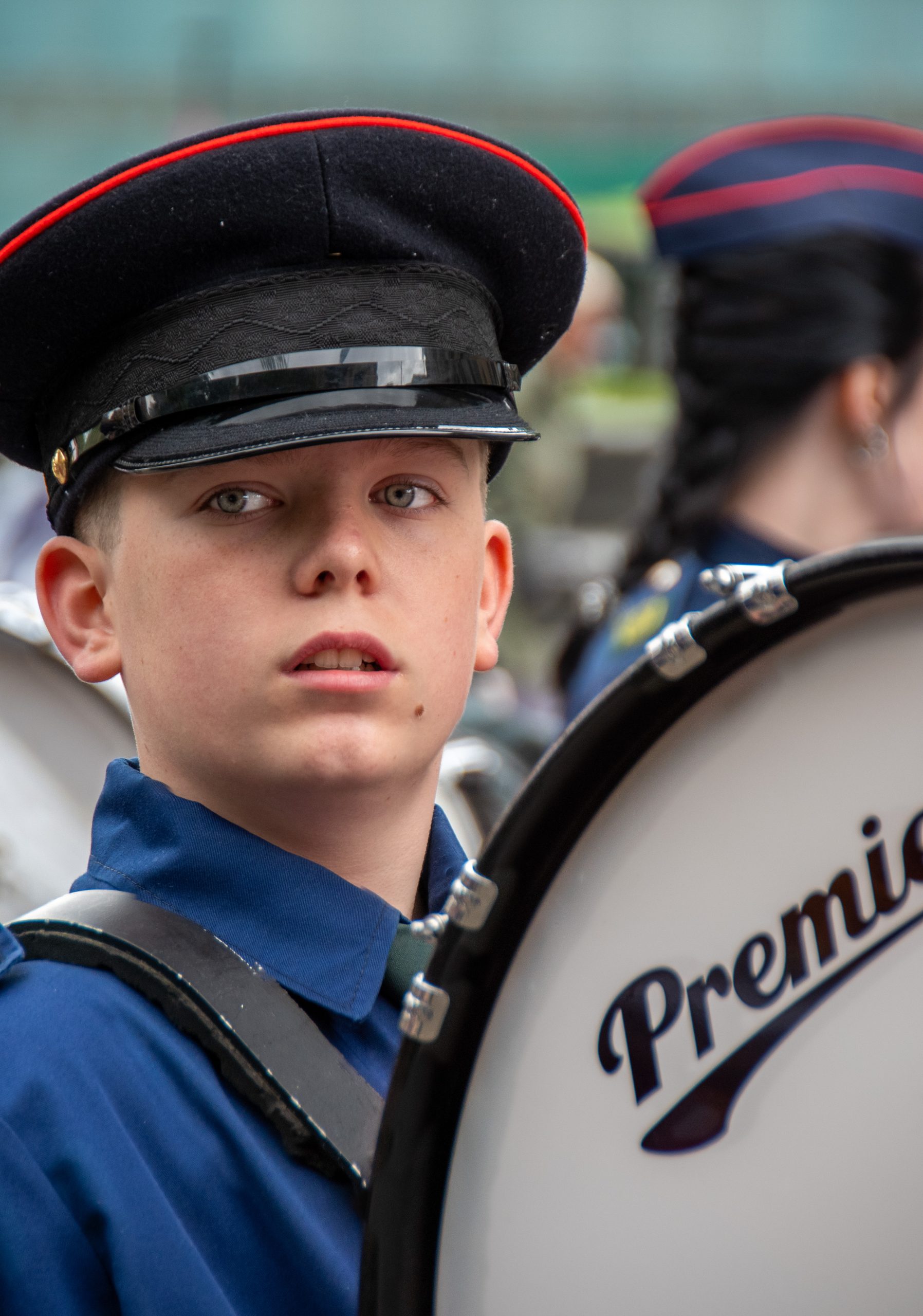
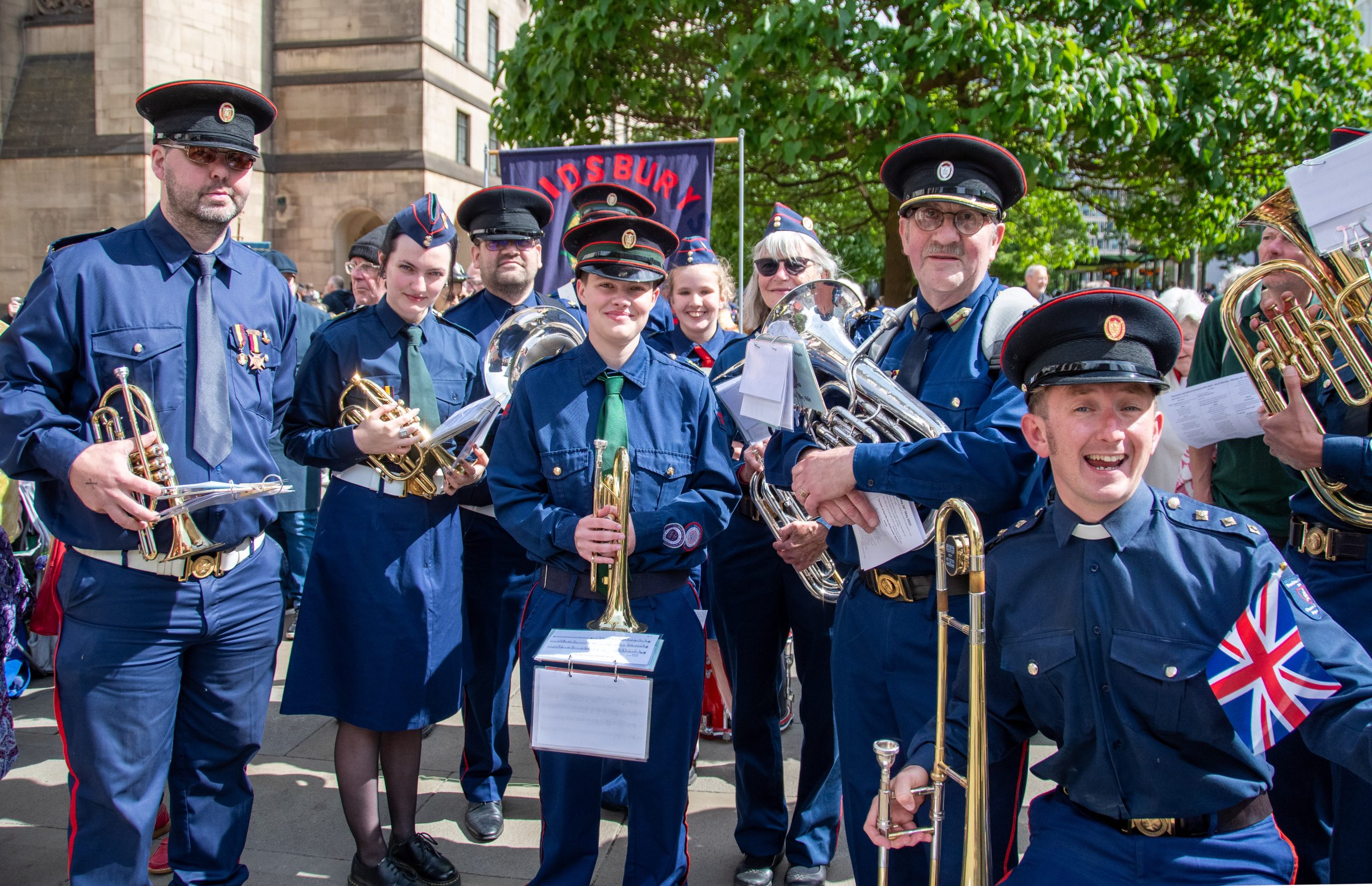
The season of Pentecost in the Anglican tradition is often associated with walking. Several villages to the east of Oldham in Greater Manchester hold “Whit Walks” also known as walks of witness. The walks are traditionally held on “Whit Friday” the first Friday after Pentecost Sunday, the day on which the Church celebrates the descent of the Holy Spirit upon the Apostles as described in Chapter 2 of the New Testament book known as Acts of the Apostles. The Manchester and Salford Whit Walk, organised by a consortium of churches in Greater Manchester, takes place annually on the second bank holiday Monday in May.
The Parish of Rainow with Saltersford and Forest to the east of Macclesfield in Cheshire annually hold a Four Churches walk, linking the three churches within the parish with the church of St Paul’s in Macclesfield. The walk has its origins in Rogation Sunday, traditionally the fifth Sunday after Easter, when members of the church would pray for God’s blessing upon the land. In pre-industrial rural Britain a good harvest was vital for the welfare of the community. In modern times the link between welfare and the land has been, mostly, lost; some would say to the detriment of all concerned.
The traditional Rogation Sunday service would begin with the blessing of a plough and a lamb. Clergy an parishioners would then together walk the boundaries of the parish, a tradition known as ‘beating the bounds.’ The Rev Simon Gowler, vicar of Holy Trinity Church, Rainow, explained how as a result of recent amalgamations the circumference of the combined parishes has become too great to consider walking in a single day. For this reason the walk has become the ‘four churches’ walk. Rev Gowler has been responsible for the reintroduction of the blessing of the plough and the lamb in a slightly more modern context.
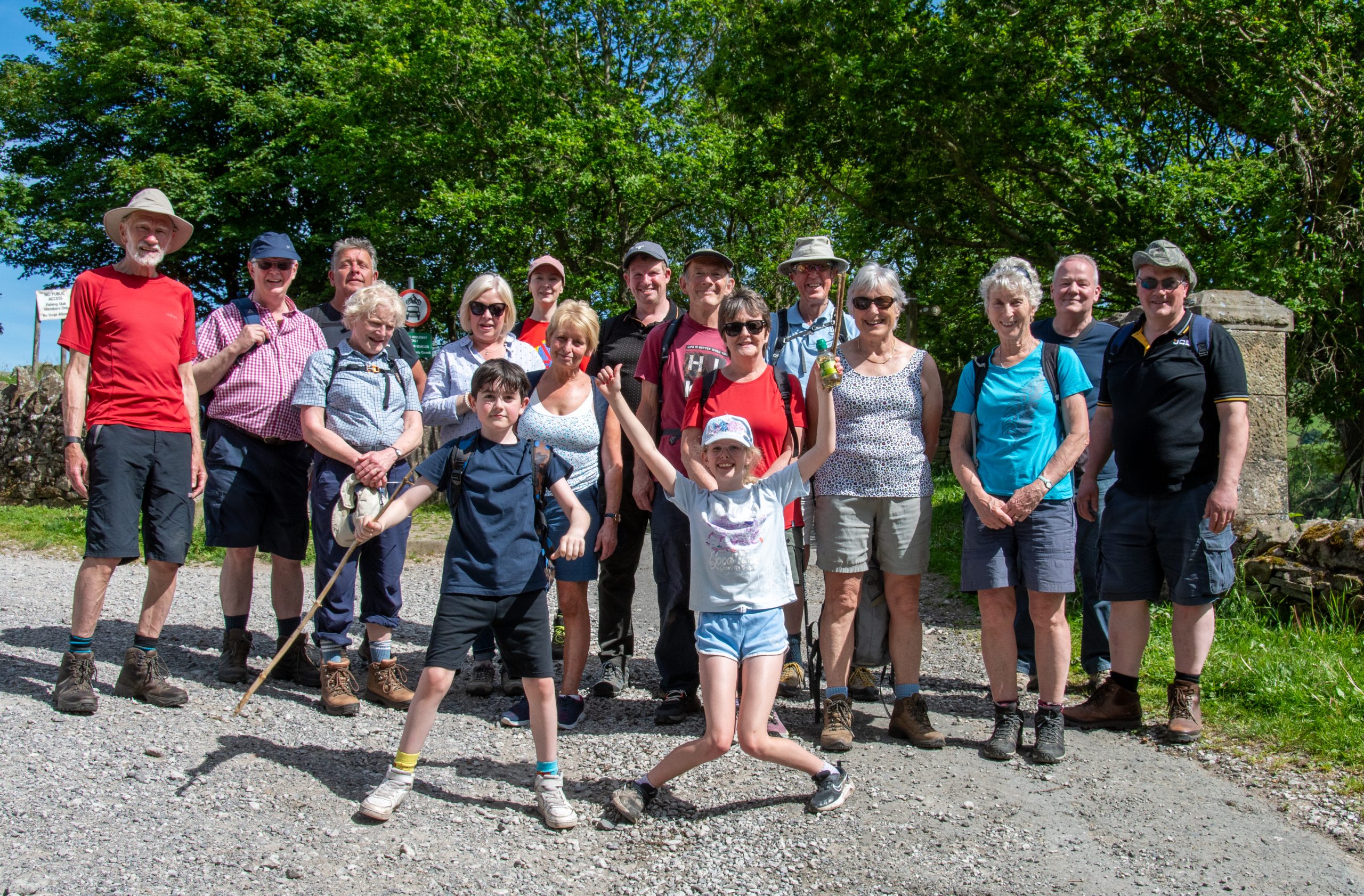
So it was that on a bright May morning I joined Rev Simon and some of the parishioners for the annual Four Churches Walk.
St John the Baptist “Jenkin Chapel”
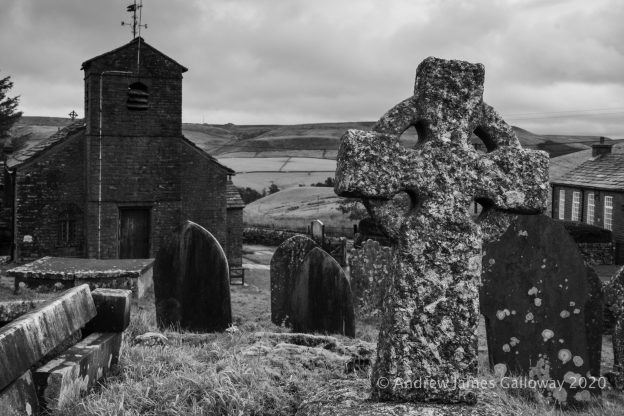
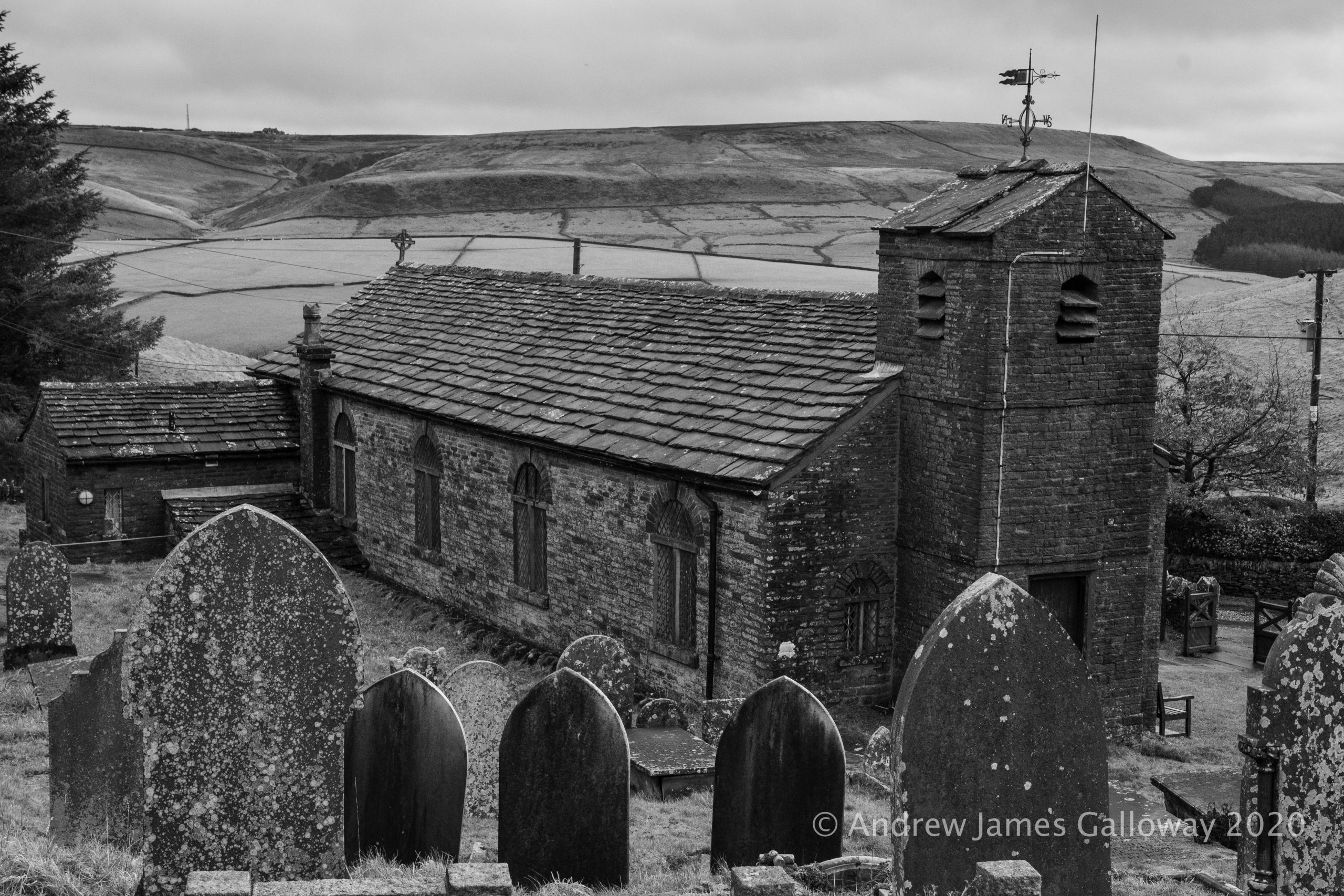
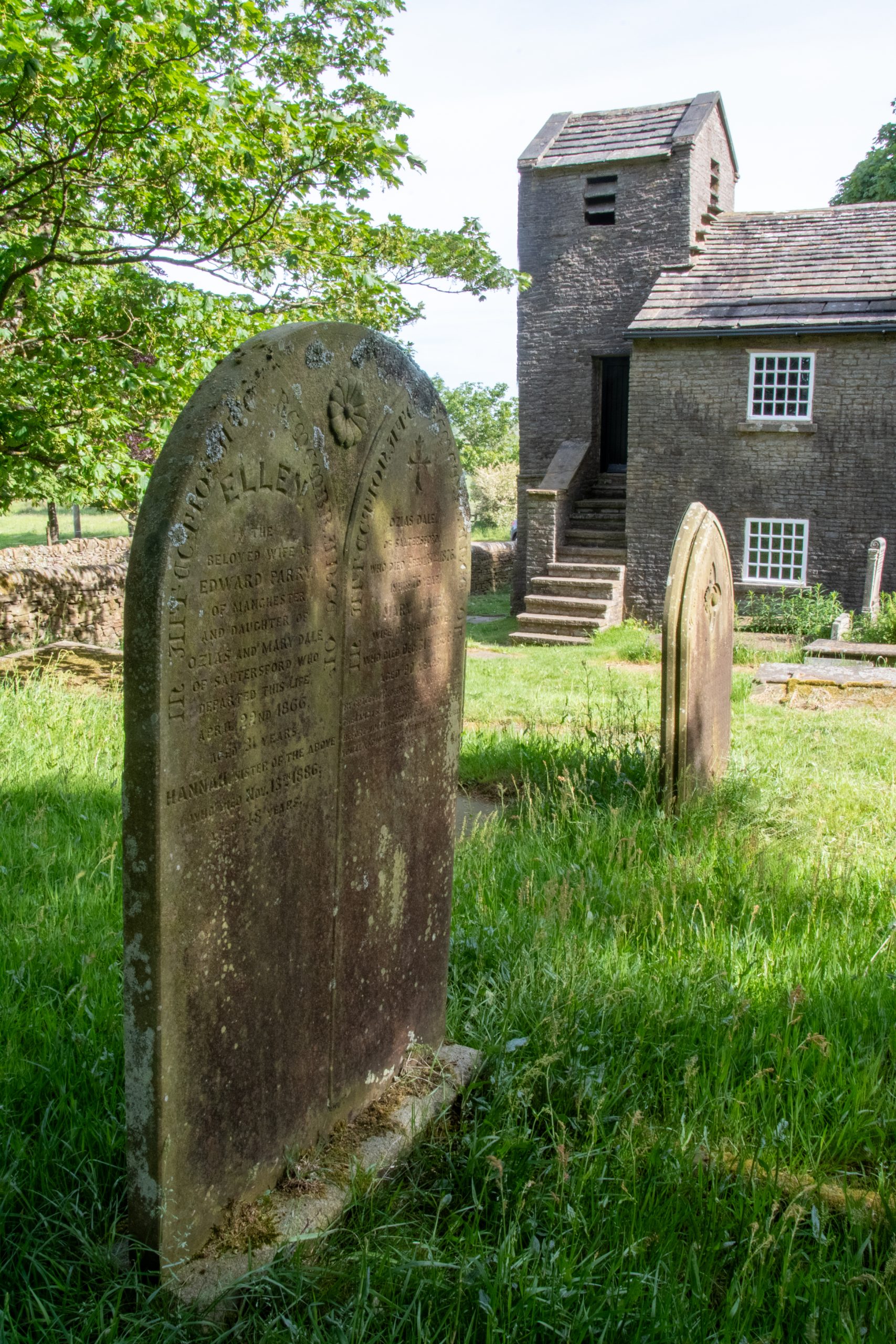
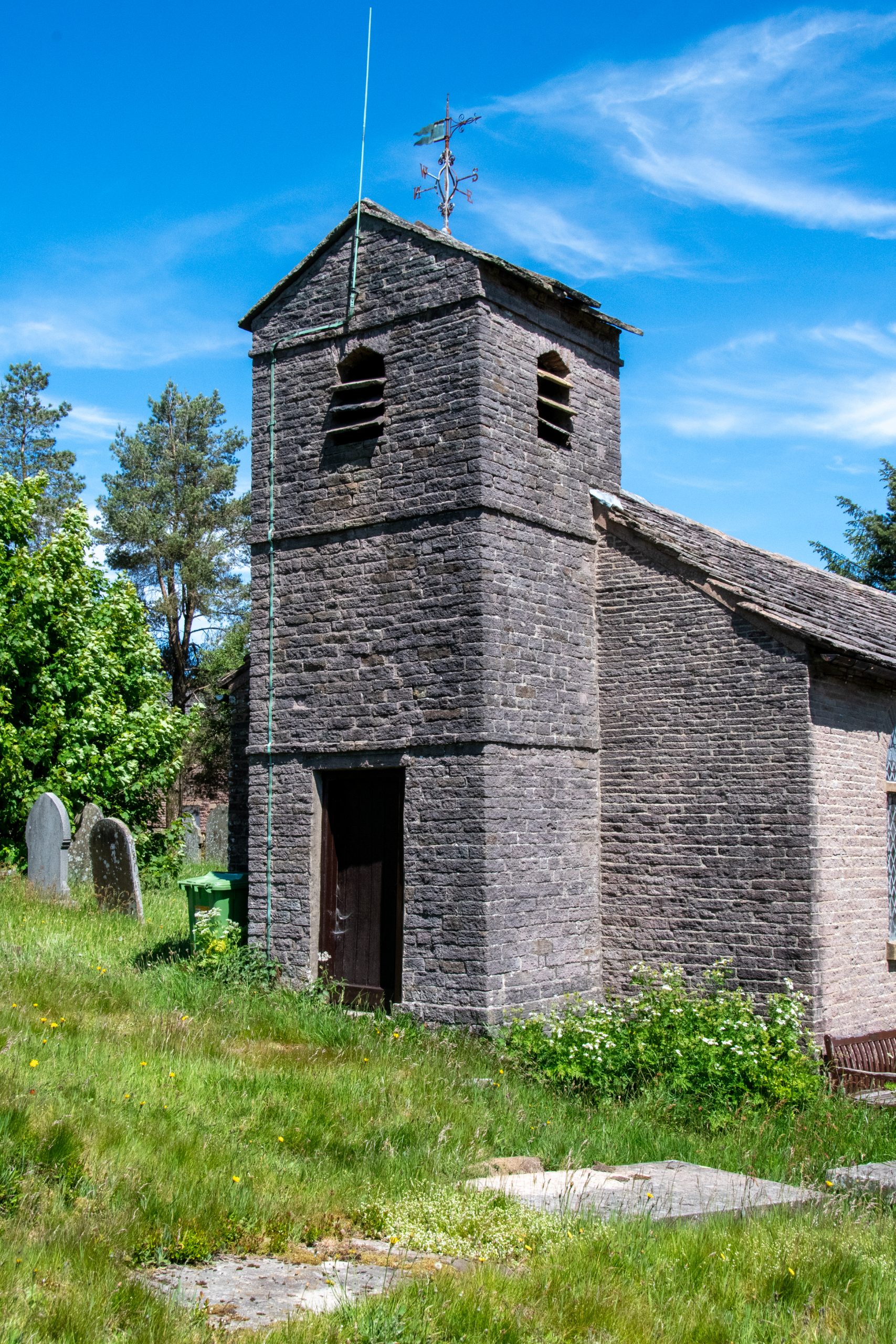
Situated at the junction of three old “salters’ ways” the little church of St John the Baptist, Saltersford was built by the local community in 1733 from local sandstone. The exterior of the two storey nave bears closer resemblance to a farmhouse than a traditional church, as was commonly found in non-conformist chapels of the region of a similar age, such as Brook Street chapel in Knutsford. A three storey tower with a single bell and pitched roof was added in 1755. Before the advent of canals and railways, salters’ ways were used to transport salt, a valuable commodity since Roman times, from Cheshire to Derbyshire by packhorse. As long as anyone can remember the church has been informally known as Jenkin Chapel, possibly named after one of the salt men who brought their packhorses this way. The gallery at the west end of the nave bears the coat of arms of the Stopford family, once residents of Saltersford Hall.
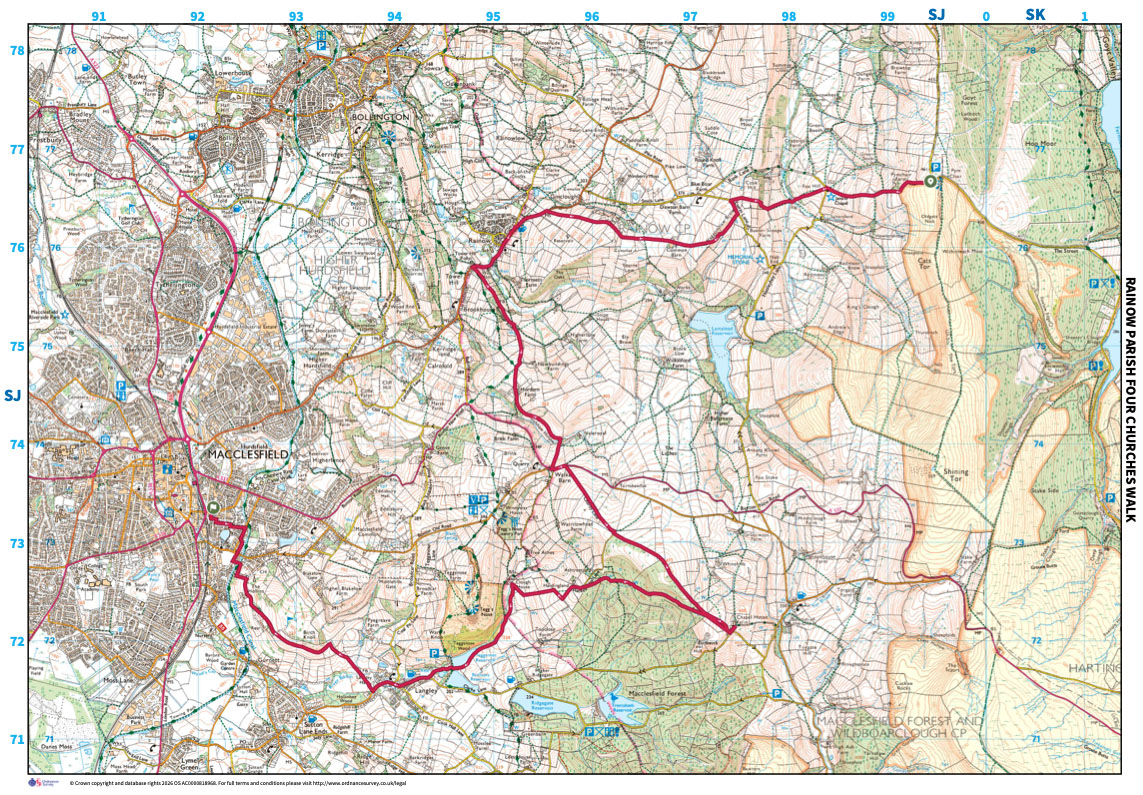
From Jenkin Chapel we headed eastwards by Fox Hill, across Todd Brook to Waggonshaw Brow, where a delightful eighteenth century farmhouse is nestled into the hillside. Continuing eastwards we passed through Common Barn Farm to arrive at Holy Trinity Church, Rainow in time for elevenses.
Holy Trinity Rainow
The Church Building Acts of 1818 and 1824 saw the provision of money from the British government for the construction of church buildings to cater for the rapidly expanding population of the country, particularly in industrial areas. The distribution of these funds was delegated to the newly formed Church Building Commissioners. Holy Trinity, Rainow was sanctioned by the Commissioners in 1845 with a grant of four hundred pounds, designed by Samuel Howard of Disley and built using locally sourced sandstone by local craftsmen.
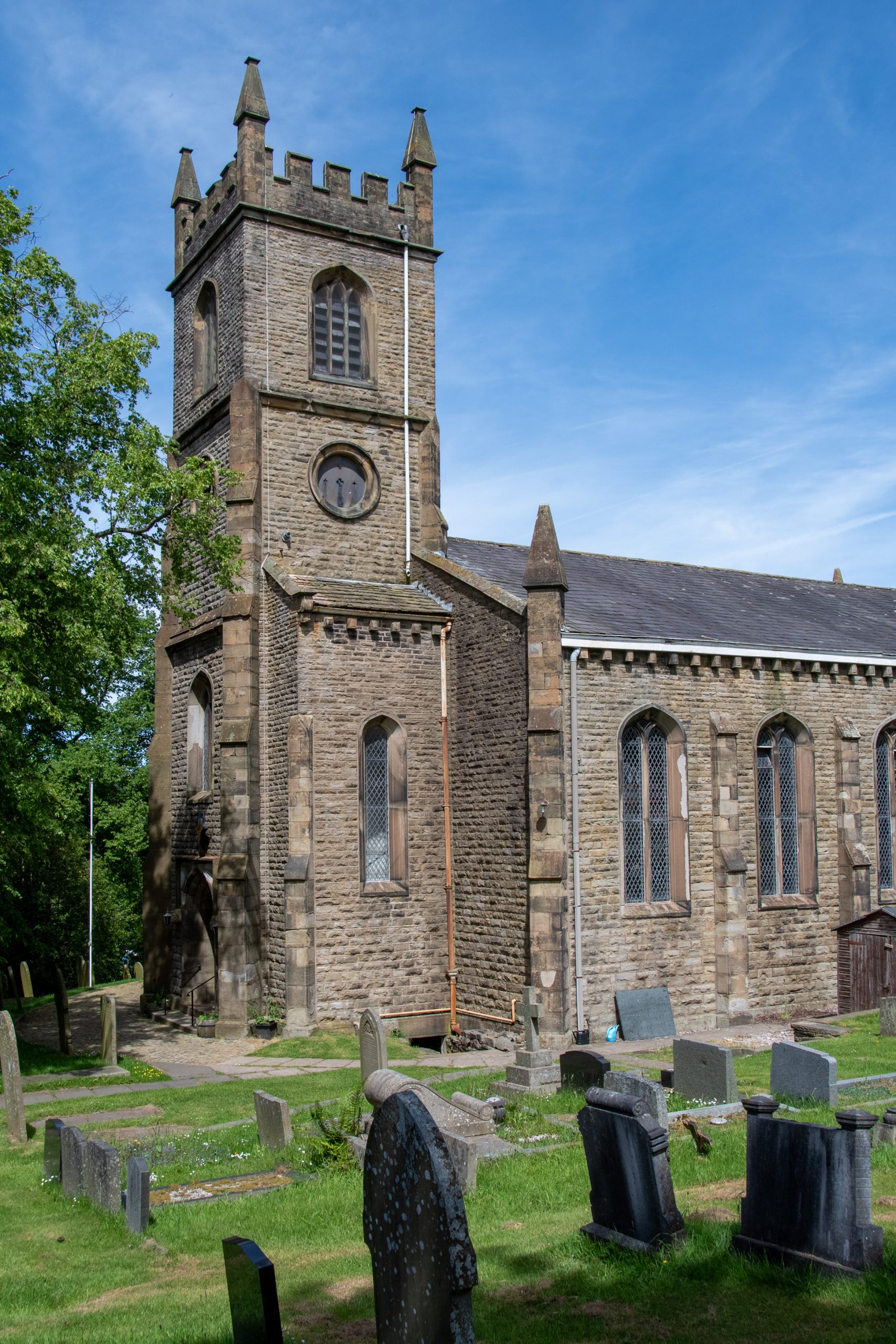
Today Holy Trinity Church is an important and active part of the local community, with services and groups taking place throughout the week as well as on Sunday (see link below). Annual events include the church fete, incorporating the popular scarecrow competition and a “Late at the Fete” music event, the harvest festival and of course, in Whitsuntide, the four churches walk.
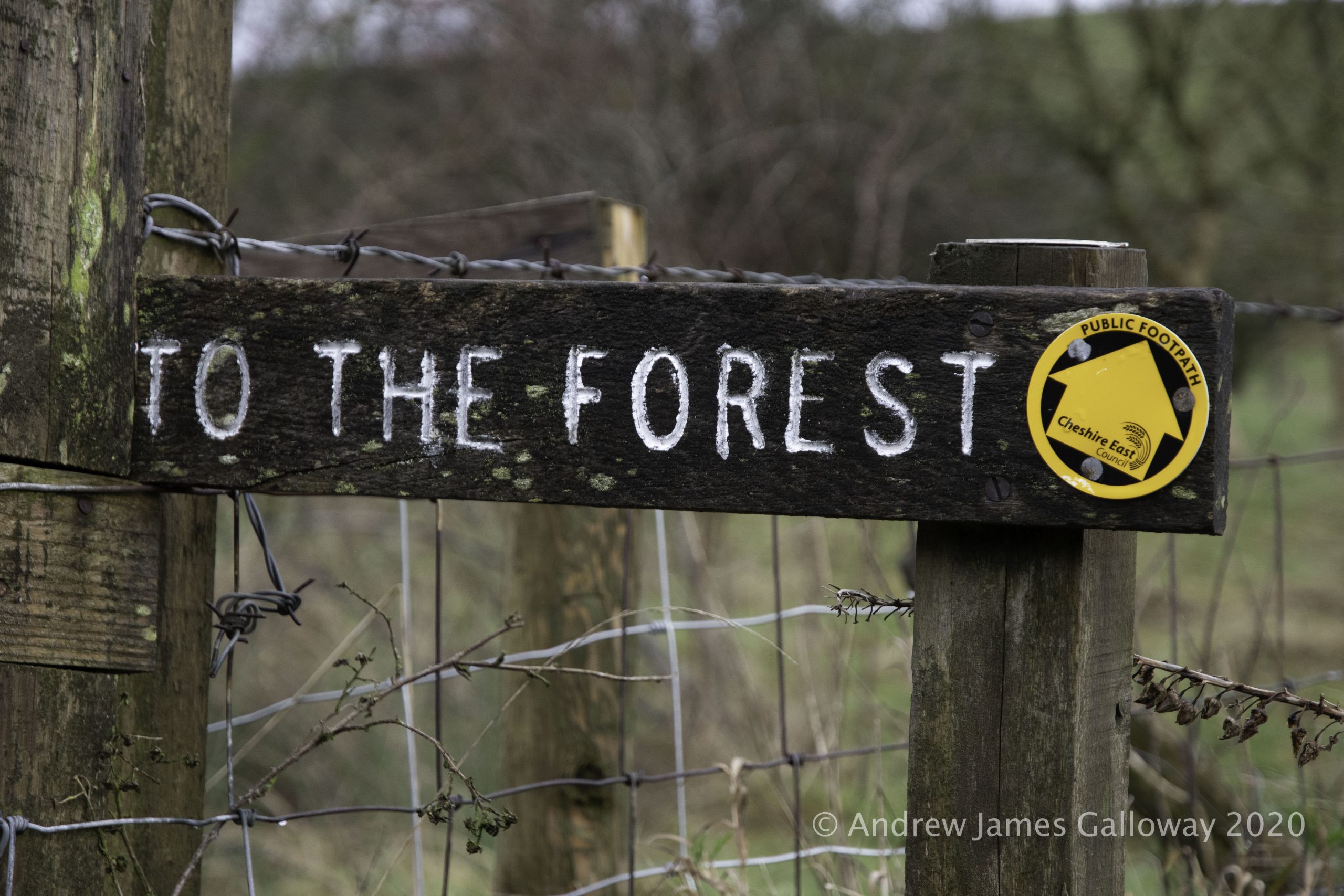
Bacon rolls, tea and coffee consumed, the group set out from Holy Trinity to the south, following the Gritstone Trail to Horden Farm, thence to via Gulshaw Hollow to Walker Barn and along Charity Lane to the Forest Chapel.
St Stephen’s Church, Forest Chapel
Records indicate that a chapel was first built in a meadow on the northeast side of Macclesfield Forest in 1673. As with Jenkin Chapel, the original building may have been constructed by the local community of local materials, possibly being non-conformist in origin. It wasn’t until 1720 that the then Bishop of Chester, Rev Francis Gastrell, discovered that the chapel was not consecrated. It has since been under the care of the Anglican Church. The chapel was almost entirely re-built following a fire in 1834.
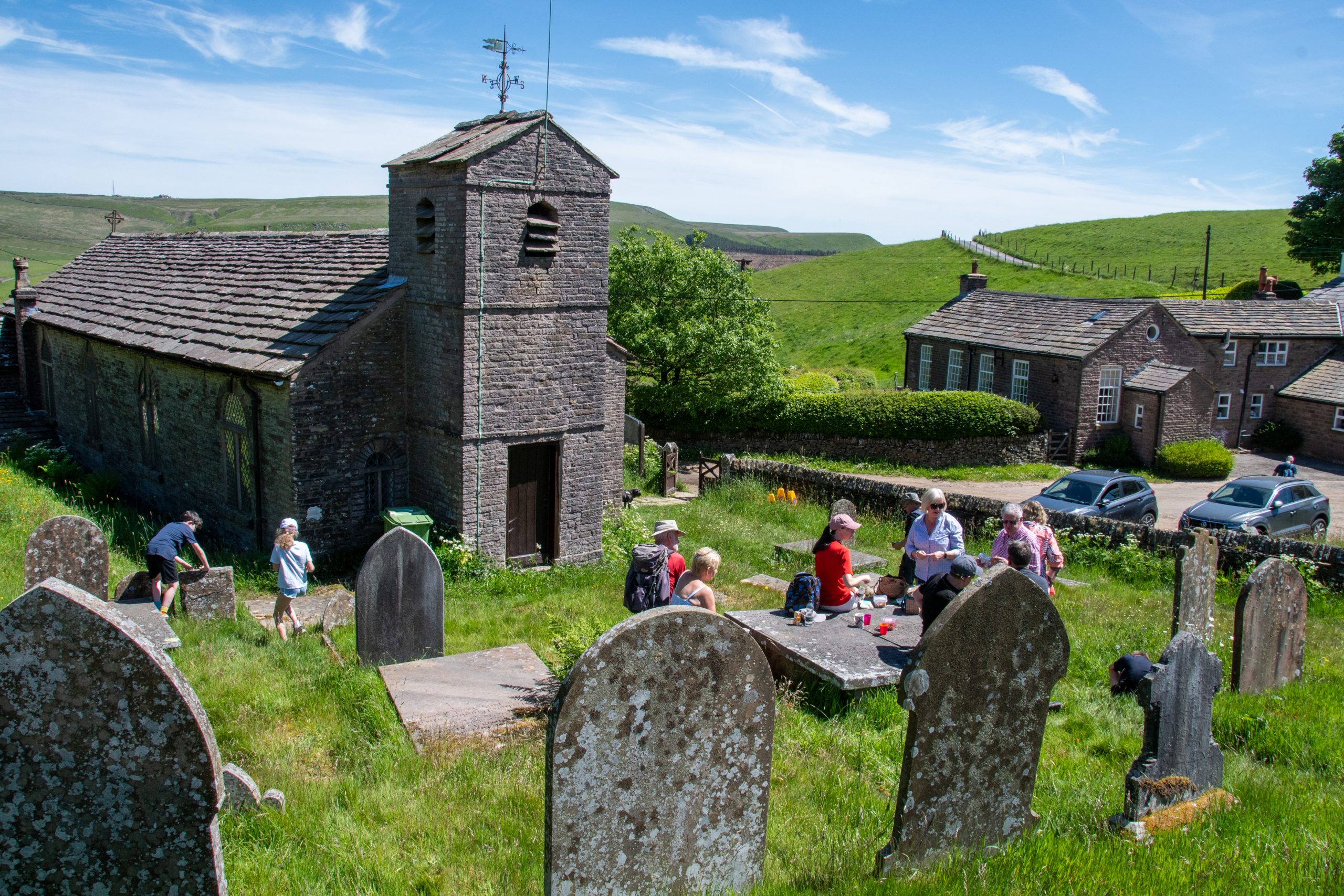
A traditional service of ‘rushbearing’ is held annually on the second Sunday of August. Rushbearing is an historic English ecclesiastical festival where fresh rushes and flowers are collected, carried to the church to be strewn on the floor. The custom originated in the Middle Ages when churches often had earthen floors. The rushes were used as a renewable floor covering and for insulation. As industrialisation brought about an increase in national wealth throughout the eighteenth and nineteenth centuries, it became common for churches to be fitted out with stone floors. Nonetheless in some parts of the country, particularly in rural communities, the tradition of rushbearing persisted. A handful of churches in the north of England have maintained the tradition, among them St Mary’s, Lymm, Cheshire; St Chad’s, Saddleworth, Greater Manchester; St Peter’s, Sowerby Bridge, West Yorkshire, and Forest Chapel.
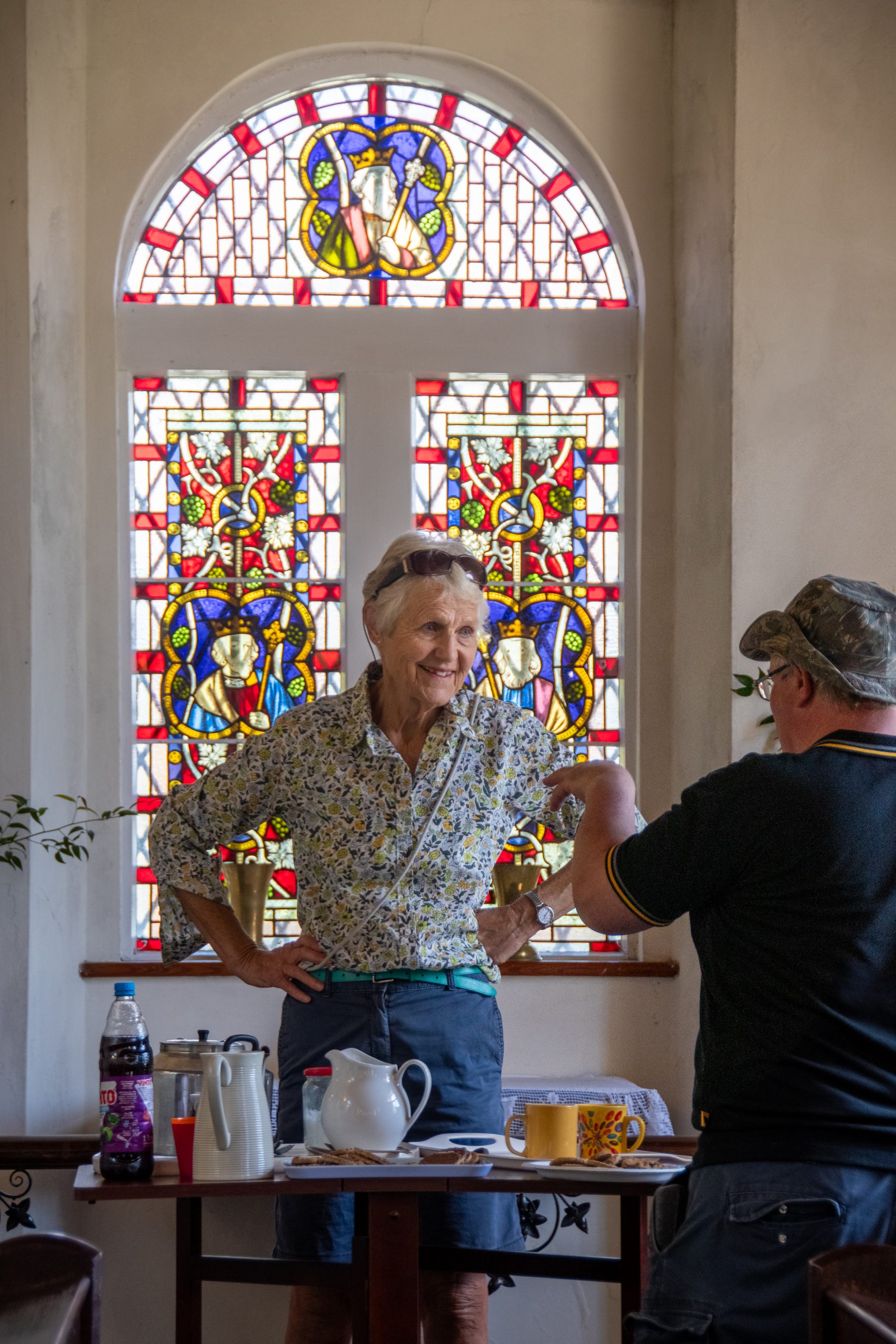
If Napoleon’s army marched on its stomach, then the Church of England surely marches on tea and cake. Ample quantities of both were provided within the sanctuary of St Stephen’s church by the good ladies of the parish for all those who had made it this far on the journey.
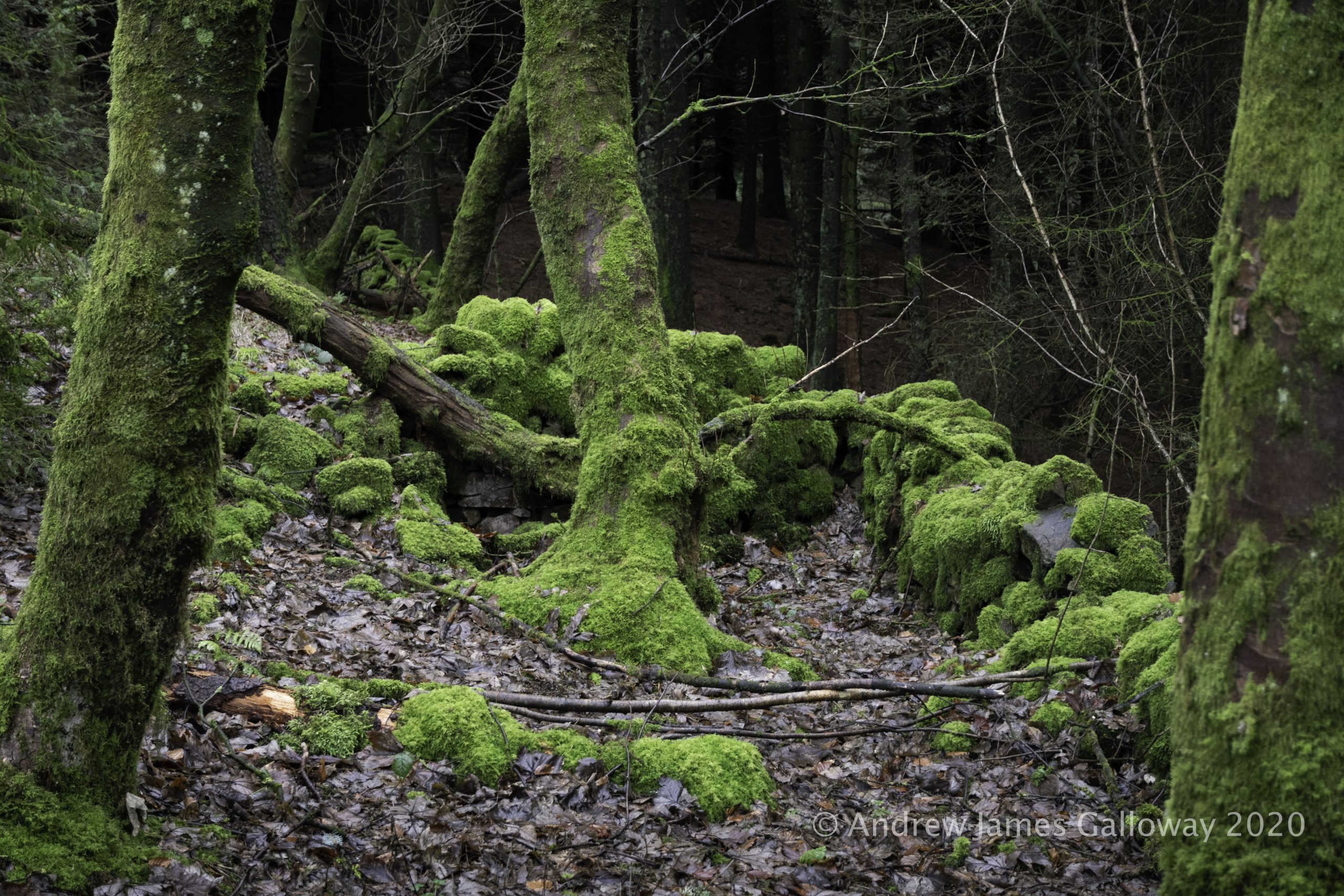
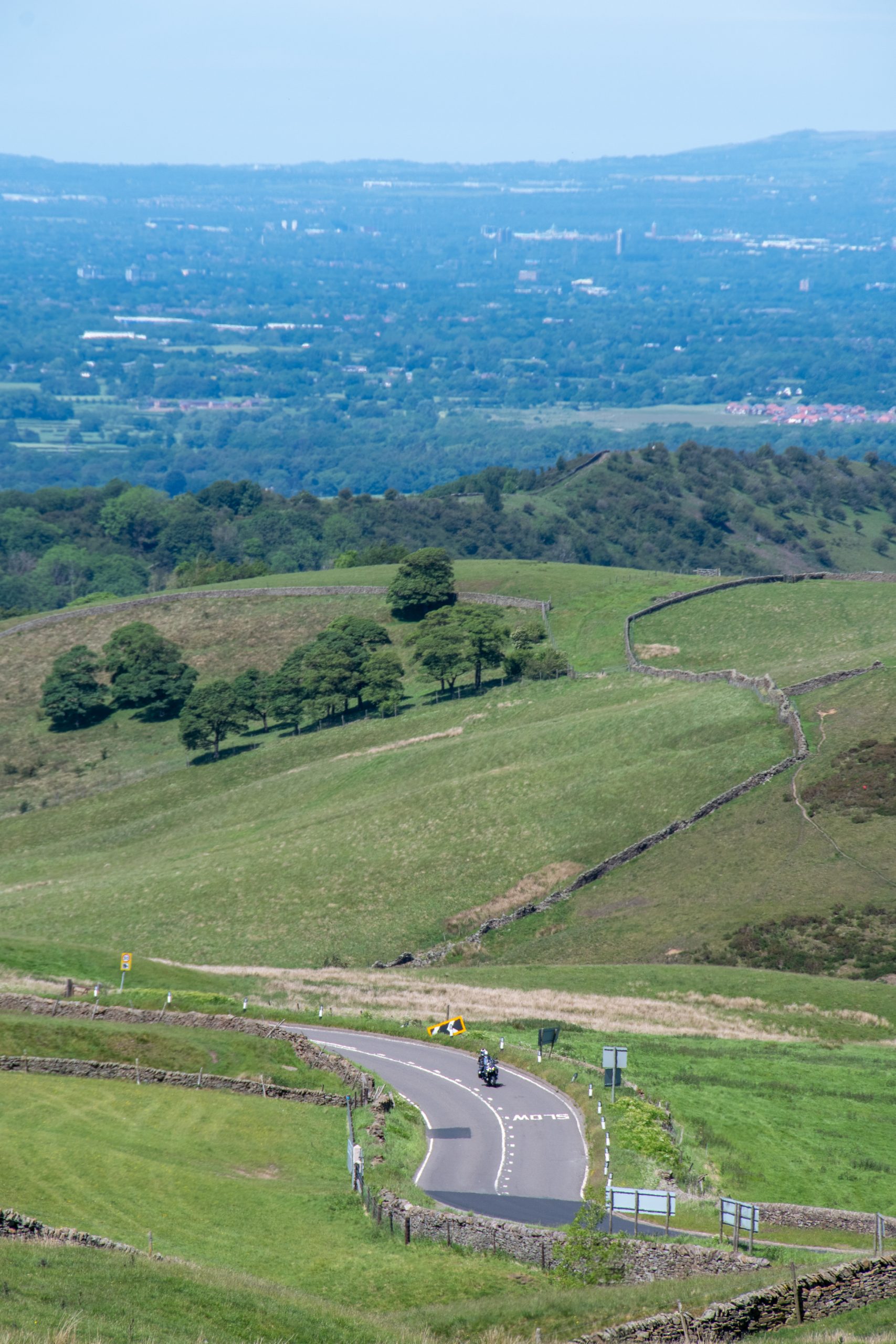
A gentle breeze and the branches of Sitka regimented spruce trees provided welcome relief from the glare of the afternoon sun as the remaining walkers made their way across the northern slopes of Macclesfield Forest to Hacked Way Lane. Passing by Clough House Farm, we skirted around the bottom of Tegg’s Nose to the village of Langley. Resisting all the temptation of St Dunstan’s Inn, we took the footpath from Langley Hall around Birch Knoll to The Hollins and so to the Macclesfield canal. It was a short walk along the canal to the original Hovis mill, and so through the town to St Paul’s Church.
St Paul’s Church, Macclesfield
As with Holy Trinity, St Paul’s Church on Brook Street was built with the aid of a grant from the Church Commissioners. Designed by William Heyley in the traditional nineteenth century perpendicular style, the building was completed in 1844.
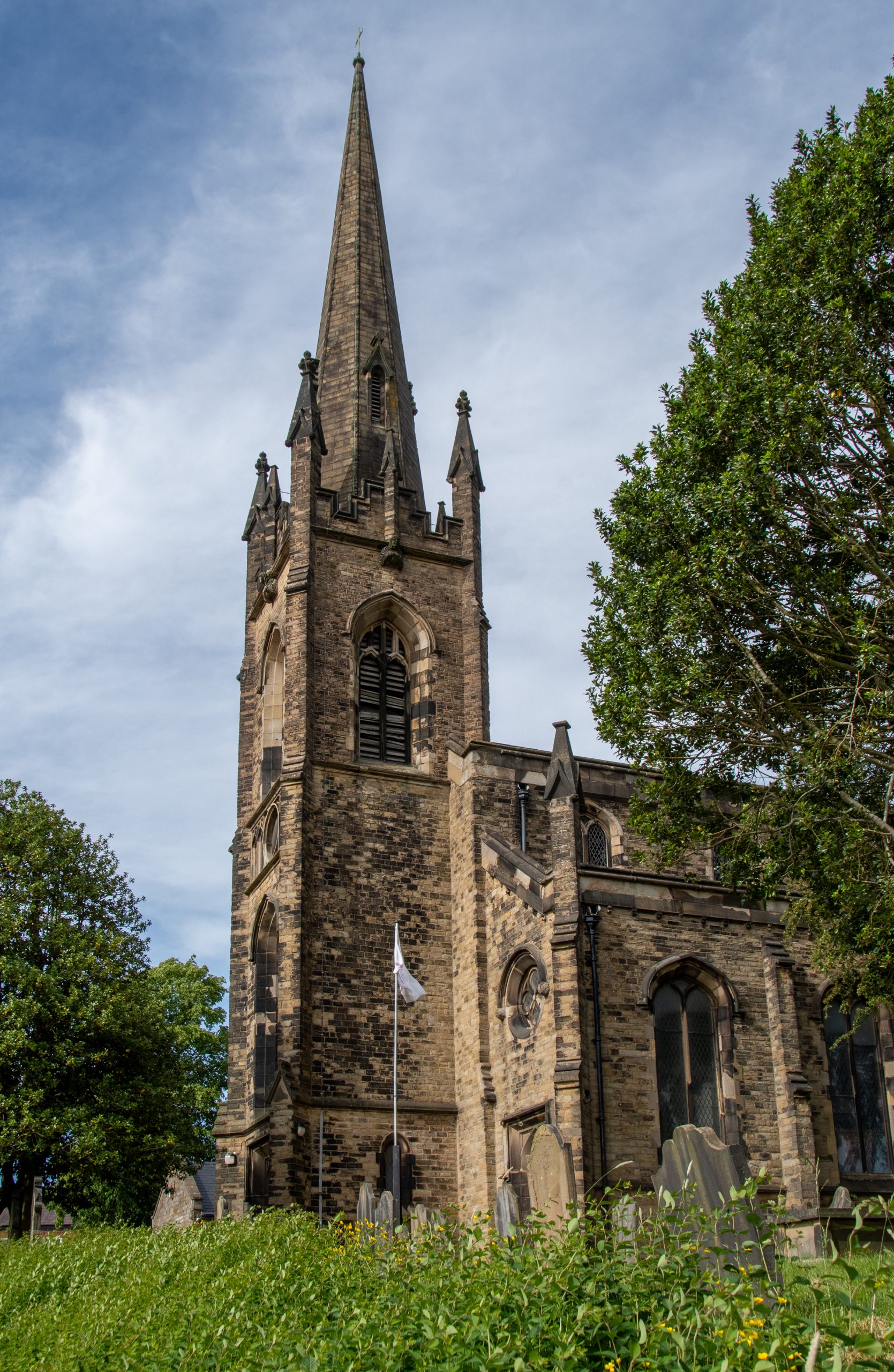
The modern church is home to a Cheshire East Connected Communities Centre, a hub of activity including uniformed groups for young people, a weekly toddler group, fortnightly lunch club plus a variety of community groups, including Knit and Natter, Pilates, Armchair Yoga and Macclesfield Community Choir. The centre is also a designated Warm Space including a year-round Saturday Morning Café with a team of volunteers offering free delicious Full English Breakfasts and other refreshments, and providing further support and companionship for those experiencing financial challenges (link below).
Thirteen arduous miles behind us, our reward was a slice of Victoria sponge and a mug of hot tea served up in the church hall.
Route
Links
Holy Trinity Church in the Parish of Rainow with Saltersford and Forest: https://www.rainowchurches.org/
St Paul’s Church, Macclesfield: https://stpaulsmacc.org/